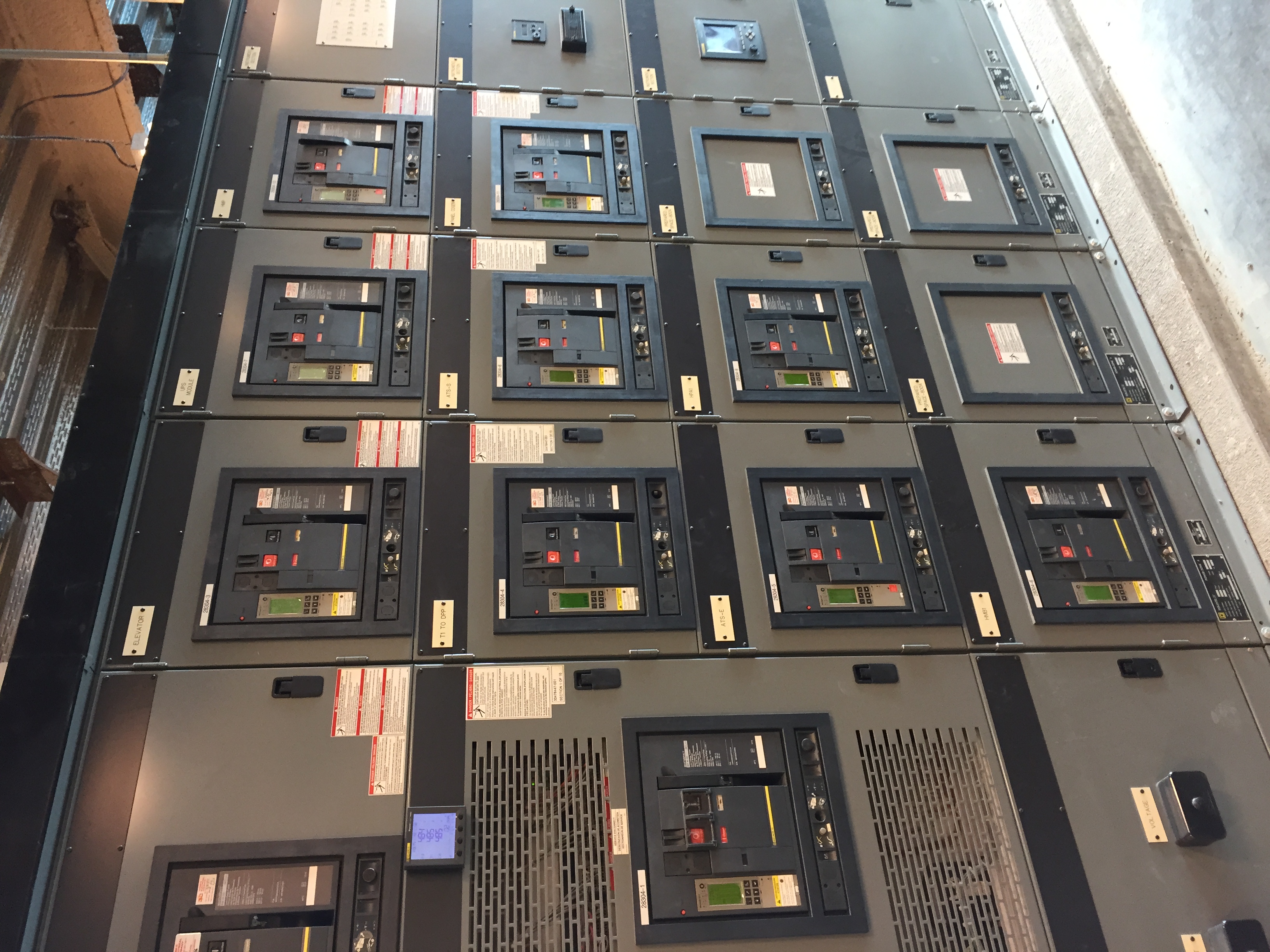
The 2023 NFPA 70B Mandate: Commercial Infrared Thermography & Electrical Maintenance Compliance Guide for Massachusetts Facilities
How the transition of NFPA 70B from a "Recommended Practice" to a mandatory ANSI/NFPA Standard impacts Massachusetts facility directors, OSHA General Duty enforcement, NFPA 70E arc-flash boundaries, and FM Global / Travelers property insurance audits.
1. From "Should" to "Shall": Why the 2023 Edition of NFPA 70B Changes Facility Liability
For fifty years, NFPA 70B was published as the "Recommended Practice for Electrical Equipment Maintenance." In 2023, the National Fire Protection Association elevated NFPA 70B to a mandatory consensus standard ("Standard for Electrical Equipment Maintenance"), replacing advisory language ("should") with enforceable mandatory directives ("shall"). Under OSHA’s General Duty Clause (29 USC 654) and 29 CFR 1910.303(b)(1), recognized industry consensus standards define the baseline duty of care following an electrical arc-flash incident or fire. Furthermore, NFPA 70E (Standard for Electrical Safety in the Workplace) explicitly states that arc-flash incident energy calculations and PPE labels are only valid if the overcurrent protective devices (breakers and relays) are maintained in accordance with NFPA 70B.
- Mandatory Written Electrical Maintenance Program (EMP): NFPA 70B Chapter 4 requires every commercial, institutional, and industrial facility to maintain a documented EMP audited at least every 5 years.
- Mandatory Thermographic Inspection Under Load: Chapter 9 requires periodic infrared thermographic surveys of switchgear, switchboards, panelboards, motor control centers (MCCs), busways, and transformers while carrying at least 40% of normal operating load.
- Insurance Underwriting Enforcement: FM Global Loss Prevention Data Sheet 5-20 (Electrical Testing) and major commercial insurers require documented annual infrared scans and multi-year breaker exercising to maintain preferred policy deductibles.
2. NFPA 70B Table 9.2.2 Equipment Condition Assessment (Condition 1, 2 & 3 Intervals)
NFPA 70B (2023) establishes inspection and maintenance intervals based on an Equipment Condition Assessment matrix that evaluates equipment age, environment (dust, moisture, corrosive vapors), operating duty cycle, and criticality to life safety or continuous operations.
- Condition 1 (Like-New / Clean Environment / Low Criticality): Visual and Infrared Thermography required every 12 months; de-energized mechanical/electrical testing every 36–60 months.
- Condition 2 (Moderate Age / Industrial or Commercial Load): Visual and Infrared Thermography required every 12 months; de-energized cleaning, lubrication, and contact-resistance testing every 24–36 months.
- Condition 3 (Critical Biotech Lab, Healthcare, Data Center, or Harsh Environment): Infrared Thermography required every 6 months; comprehensive de-energized maintenance every 12–24 months.
3. How to Read an Infrared Thermography Exception Report (NETA / NFPA 70B Delta-T Thresholds)
When an Electrical Dynamics Eaton-Certified technician scans your 480V switchgear, every thermal signature is evaluated against both the adjacent phase conductors carrying similar current (Phase-to-Phase ΔT) and ambient room air temperature (Over-Ambient ΔT), corrected for surface emissivity and true RMS load current.
- 1°C to 3°C (2°F–5°F) ΔT Between Phases: Possible deficiency; log for monitoring and verify load balance across phases A, B, and C.
- 4°C to 15°C (7°F–27°F) ΔT Between Phases: Confirmed high-resistance connection; schedule de-energized disassembly, oxide removal, contact replacement, and calibrated torque-wrench re-termination.
- Greater than 15°C (>27°F) ΔT Between Phases or >40°C (>72°F) Over Ambient: Major emergency thermal fault; immediate load shedding and corrective repair required to prevent busbar melt-down or arc flash.
NFPA 70B (2023) & FM Global 5-20 Commercial Maintenance Checklist
| Equipment Assembly | Infrared Scan Interval | De-Energized PM Interval | Key NFPA 70B Field Tasks |
|---|---|---|---|
| 480V Main Switchgear & Switchboards | Every 6–12 Months | Every 24–36 Months | IR scan, HEPA vacuum, insulator cleaning, bus torque check, trip-unit test |
| Overhead Feeder & Plug-In Busduct | Every 12 Months | Every 36 Months | IR scan of every splice joint & bus plug stab, hanger seismic inspection |
| Dry-Type Step-Down Transformers | Every 12 Months | Every 36 Months | Coil IR scan, core ventilation vacuuming, primary/secondary lug torque & Megger |
| Automatic Transfer Switches (ATS) | Every 6–12 Months | Every 12 Months | Main contact inspection, arc chute check, transfer timing & load-bank verification |
Request an On-Site Engineering Evaluation or Compliance Proposal
Direct routing to Electrical Dynamics Estimating (info@electricaldynamics.com), 24/7 Service & Fire Alarm (service@electricaldynamics.com), or EDI Network Systems (telecom@electricaldynamics.com).